
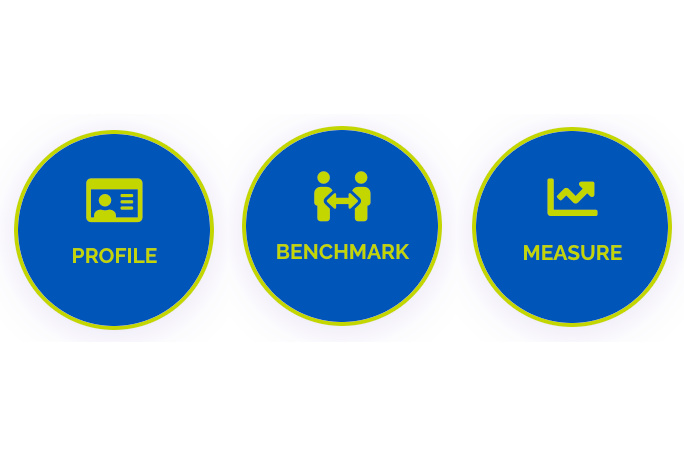
PROFILE, BENCHMARK, MEASURE: A LANGUAGE FOR INTELLIGENT TENNIS
For more than a century, tennis has judged player development using two crude instruments: score and ranking / rating.
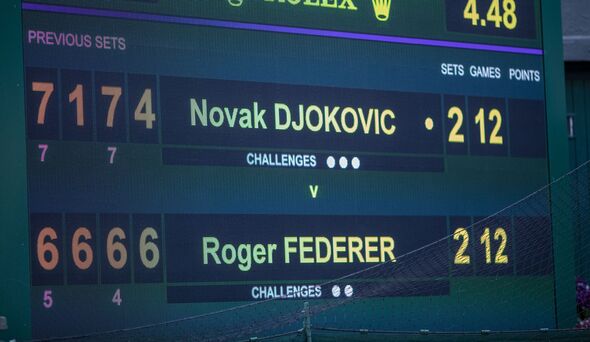
On the surface, they appear to tell us everything we need to know. But the deeper you look, the clearer the limitations become. A 6–2, 6–2 scoreline can be far more competitive than it appears—or far less. And while rankings and ratings track progress, they don’t explain why a player is improving, or from where the next improvement should come.
For players aspiring to reach higher levels, that missing information is critical.
It’s why we created 135 Tennis Intelligence: to give players, parents, and coaches a way to see the game beneath the scoreline—and to track development with the same clarity we expect in school subjects like English, Math, and Science.
The mantra is simple, but transformative:
WHY TRADITIONAL METRICS FALL SHORT
The Problem with Score
A tennis score hides more than it reveals. A 6–2, 6–2 scoreline might involve:
- Multiple games that went to deuce.
- A player who created opportunities but failed to convert.
- A tight first four games to 2-all then a player running away with the set.
- A blow-out first 5 games to 5-0 but a failure to close out the set.
- A combination of these.
The score is binary: win or lose. Tennis performance is not.
The Ranking / Rating Problem
Rankings and ratings reflect outcomes—not quality. They don’t tell you:
- Which patterns are working / not working.
- Which sequences break down under pressure.
- How effectively a player constructs points.
- Whether their strengths stack up at the next level.
A player may work hard, rise in ranking, and still be performing inefficiently. At higher levels of the game—where gaps between players narrow—working harder isn’t enough. You must work smarter, which requires the right tools.
the solution
For the first time in tennis, players, parents and coaches can access development data that is:
- Specific
- Sequence / Pattern-based
- Age-calibrated
- Easy to understand
Importantly, it’s data that tells you not just what happened, but how, why and what to do next.

Every player has an identity. It may not be unique, but in an individual sport like tennis, a player’s strengths, weaknesses, tendencies, and reliable patterns / sequences form their individual player profile.
Using 135, 246 and 7+ metrics as a starting point, we can then breakdown how a player actually plays.

Data means little without context. Benchmarking provides that context.
We benchmark at regular intervals in academics. A student’s English or Math level is benchmarked so their learning plan can be tailored.
Why shouldn’t tennis development work the same way?
Player development is not linear. It’s full of dips, surges, and plateaus. That’s why measurement must be ongoing.
Measurement turns training into feedback. Feedback turns effort into improvement. Improvement builds confidence—real confidence, based on evidence.
A Smarter Path Forward for Player Development
Working hard is essential. But at higher levels, working smarter is what separates future professionals from those who plateau.
135 finally gives tennis what other fields have had for decades:
- A development profile.
- Contextual benchmarks.
- Measurable progression.
It’s a system built not on opinion, nor on guesswork, but on what tennis actually is: shot sequences and patterns.